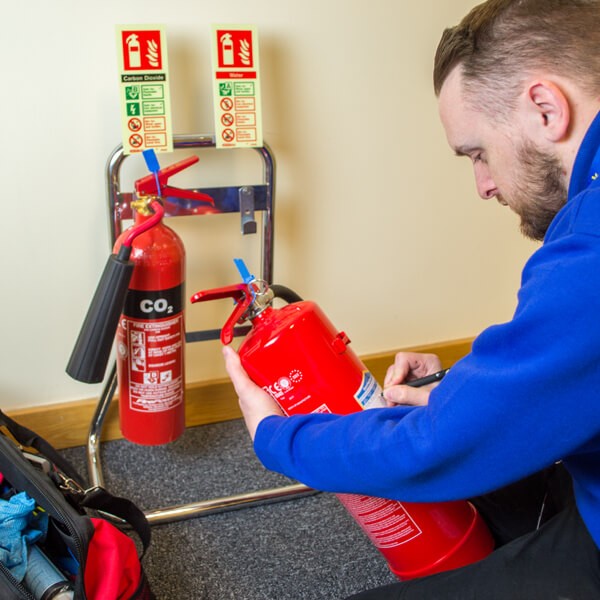
Top 10 Tips To Evaluate Certified Technicians To Take The PAT in Burntwood
The ability of the person who performs Portable Appliance Testing (PAT) is what transforms an ordinary test into a safety regime which can be legally justified. As per UK legislation (specifically the Electricity at Work Regulations of 1989) there is no obligatory licensing scheme for testers of PAT. Regulation 16 merely states that an individual must possess the "technical skills or experience" that is required to protect themselves from injury or danger. This principle of 'competence' places the full responsibility on the dutyholder (employer) to choose and appoint technicians who can show a mix of formal training, hands-on expertise, and sound judgment. Because of the absence of any mandatory qualification, there are various capacities of technicians. It is crucial that the dutyholders know the methods to determine competence beyond simply having a certification. An electrician who is truly skilled is more than an electrician who is able to perform tests. He or she understands the underlying principles of electrical safety, and can effectively interpret the results, take an informed decision on whether to pass or fail, and provides valuable risk assessment insight.
1. The definitions of competence in the law in EAWR 1989. in Burntwood
Regulation 16 in the Electricity at Work Regulations of 1989 defines that a person's competence is required to prevent injuries or risks. HSE defines competence as the ability to perform an activity in a safe and effective way without putting themselves or others at risk. For testing PAT the test is comprised of three factors: sufficient understanding of electricity (theory) and practical experience (practical application) and a good understanding of the system (the particular appliances and the surroundings they work in). A technician is only legally qualified if they are able to demonstrate all three.
2. Formal Qualifications vs. Demonstrable Competence in Burntwood
Although there isn't a lawful requirement to obtain a specific certification, formal education provides the most evident proof of expertise. City & Guilds Qualification 2377 ("In Service Inspection and Testing of Electrical Equipment") is recognized by industry. The mere fact that you have this certification does not imply competence. Practical experience is required. A dutyholder should look for an appropriate certification as well as evidence of previous experience. A technician with no formal qualifications would need to prove their knowledge and experience to be regarded as qualified.
3. City & Guilds qualification 2377 explained
City and Guilds 237 is a Level 3 Qualification that measures a candidate’s understanding of the IET Code of Practice. The City & Guilds 2377 is available in two distinct parts. 237777 (theory multiple-choice test based on theory) and 237778 (practical assessment). The complete certification proves that both knowledge and skills were assessed independently. In order to confirm this certificate it is advisable to inquire for the certificate's number and confirm its validity using the City & Guilds online verification portal, as certificates can be faked.
4. The Necessity of Practical Hands-On Experiential Learning in Burntwood
A theoretical understanding is not useful without the ability to put it into practice. A technician who has extensive experience must be able to test various appliances and in various settings. They can identify faults that a novice might overlook working in different environments such as construction sites or industrial facilities, and work with equipment in a safe manner. The dutyholder should inquire about the years of experience the technician holds and the type of sites that they work at to assess the relevance of their professional background.
5. The IET Code of Practice on In-Service Inspection and Testing
The IET Code of Practice serves as the bible of PAT tests. The IET Code of Practice is the standard for PAT testing. Technicians who have been qualified must possess the copy and have a working knowledge of the. It is crucial to comprehend the different classes of equipment and the order of visual inspections and tests, how to use test instruments correctly and also the results that can be considered acceptable or not. This is an important indicator of professionalism and competence.
6. Equipment Calibration Understanding Test Instruments
A technician who is competent recognizes the significance of their own testing equipment to obtain accurate results. It is essential that they know their PAT test equipment needs to be calibrated by a reputable UKAS laboratory on a regular basis (typically each year) to ensure that the readings are accurate. They must be able provide a valid certificate of calibration for their equipment. Additionally, they should know how to operate the device properly, conduct a daily user check (e.g. or the lead test) and then interpret the results it provides rather than just relying on blindly recording numbers.
7. The ability to conduct meaningful inspections in Burntwood
90% of issues can be found through a thorough examination. A technician who is highly competent will pay particular focus on this aspect. They will look over the plugs and cables carefully and connectors, as well as casings and look for indications of damage or wear. They know how to properly connect a plug and ensure the correct fuse rating. They may not bother with this step or rush through it, depending solely on the electronic tester. This is a major error.
8. Judgement and decision-making: Interpreting the results and applying the Pass/Fail criteria in Burntwood
The tester's electronic sensors provide readings; the technician provides the judgement. Ability to comprehend the readings in relation to the IET Code of Practice pass/fail limitations and the appliance is a mark of competence. For instance they should be aware of when an slightly higher insulation resistance reading is acceptable, or when the earth continuity reading is acceptable but could actually indicate a latent problem on the appliance in question. Experts with the right qualifications are able to make good decisions.
9. Concerns with Liability and Insurance in Burntwood
Although it is not required by law, a competent technician should ideally hold Public Liability Insurance (e.g., PS2-5 million). The client will be protected in the event that the technician damages property during the test. Employing a competent and technically skilled technician enhances the dutyholder's legal defence. It demonstrates that all reasonable measures were used to select a qualified candidate.
10. Documentation and Communication Skills in Burntwood
A testing process that lacks clear and accurate documents is not worth the effort. A certified technician must create clear, legible reports as well as asset registers that correctly identify every appliance, keep track of the results of all tests, and clearly state the pass or fail result. They must also be able to effectively communicate with the duty holder, describing any issues found, the associated risks, and the required actions (e.g., repair, replacement). Communication is a crucial aspect of safety. Check out the top rated emergency light testing in Burntwood for website examples including fire electrical extinguisher, extinguisher service, fire extinguisher for electrical fire, electrical extinguisher, electrical extinguisher, all about fire extinguisher, fire extinguisher in electrical fire, fire extinguisher in electrical fire, electrical fire extinguisher, fire electrical extinguisher and more..

Top 10 Tips On Cost Transparency For Fire Extinguisher Maintenance in Burntwood
Cost transparency is more concerned with compliance and risk management rather than price comparison. Inaccurate pricing could conceal significant compliance issues and create unforeseen liability within the UK's strict regulatory framework, which is governed by the Regulatory Reform Order for Fire Safety 2005. Transparent quotes provide a detailed outline of the services you'll receive. They demonstrate the service provider's conformity to British Standards, their operating method, and the commitment to ethical business. Hidden fees, vague line items, or unclear equipment replacement guidelines are not only problems with money, they're major red flags indicating potential compromises in service quality documents for compliance, and ultimately your legal due diligence. Cost transparency is the best way for an informed decision to be made, which balances budgetary restrictions with the requirements of fire law.
1. The breakdown of the cost of a service visit: Labour, Parts, and Consumables in Burntwood
A clear and transparent estimate will include the price for every service. The annual service should separate labour (the time the engineer has to spend on-site) from any replacement consumables and parts. This will show that the company isn't sloppy for example, reusing older seals or not charging units correctly. This also permits an accurate comparison of different providers since one low headline price could exclude these crucial components, making it fundamentally untrue.
2. Pricing Model Clarity: All-Inclusive vs. Pay-As-You-Go
The quote must clearly indicate the pricing model being used. A Fixed-Price or All-Inclusive contract should only have one annual fee that covers all scheduled service, parts, labor, and refills. It should not be additional charges for 5 years old or 10 years-old services. Time-and Materials (or Pay-As You Go) types are likely to have lower service charges at the beginning, but will add additional charges for services that are extended as they are due. Transparency here is vital to avoid budget-related shocks many years into a contract and to determine where the financial risk (for expensive overhaul services) is actually located.
3. Charges for extended services (5 and 10-year).
If extended service runs out, biggest cost surprises will occur. Transparent providers will not conceal future costs. A transparent provider will not hide these future costs. They will provide a comprehensive price list or schedule in their quotations that estimate the cost of a 5-year extension service (for powder, foam and water) and a 10-year overhaul (for CO2), depending on the type of extinguisher. This allows you to budget accurately for the full contract and determine the long-term value of an all-inclusive plan against a pay-as-you go model.
4. Policies on Equipment Replacement and Condemnation in Burntwood
Transparency here is key. The quotation should detail the policy of the service provider and any associated expenses for replacement of extinguishers which are Beyond Economic Repair (BER). This may be corrosion, major damage or outdated models. What if they replaced the model with a new model? How much will it cost? What's the price? Lack of clarity suggests that the service provider could make use of equipment condemnation to gain the right to force an unexpectedly high cost for replacement to hold your compliance in a bind.
5. Disclosure of hidden and extra fees: Callout, mileage administration in Burntwood
Be sure to look over the small print in order to determine if there are any additional charges that are not disclosed. Most reputable businesses will disclose them in advance. Key fees to identify include the following: mileage charges (beyond a certain distance) emergency call-out fees (and their cost outside of business hours), Administrative charges (for processing paperwork or certificates), and Parking/Congestion charges (particularly applicable to city-centres). The reason for this is that a figure that appears low may have been omitted of these extra costs.
6. Duration of Validity and Price Terms of Guarantee in Burntwood
Professional quotes will clearly specify the period of validity (30-90 days is common) that protects you from any price increases that could be incurred after you have decided to proceed. Furthermore, for longer-term contracts, it should specify the conditions of any price guarantee. Will the annual fee be fixed for the contract term? Will it rise each year in line with an established index, such as CPI or CPI or CPI-U? Is it up for review every year at the discretion the service provider? Transparent contract terms prevent disputes and provide budget certainty.
7. Different Pricing by Type and Size of Extinguisher in Burntwood
Service costs can vary greatly according to the size and type of extinguisher. Transparent quotes do not come with a blanket price. It will show you the price per unit. For instance it will differ between a CO2 extinguisher of 2kg and an undiluted chemical unit of 6 litres. This demonstrates a accurate and fair evaluation of your specific inventory and the actual work required instead of an averaged estimate that may overcharge for simpler equipment.
8. Documentation and Certification fees in Burntwood
It is not an option to issue a legal certification of conformity. To include the cost of producing, issuing and maintaining this essential document in the charge for service, it must be listed. It will not be included as a line item on the transparent quotation or added as an "admin charge" to the final invoice. This is a sign of poor business practice if an organization charges additional fees to show that work was done in compliance.
9. Payment Terms and Schedule in Burntwood
The terms of payment should be clear and reasonable. This is a sign of a reliable vendor. Quotes should include details such as the time frame of the invoice (e.g. quarterly, annually) and the payment methods and the net terms (e.g. 30 days from the date of invoice). It is essential to determine if you need to make a payment in advance of the service or after it has been completed. Avoid providers that demand an upfront payment of the entire amount for an annual contract before the services are rendered.
10. Comparison Framework for Evaluating Quotes that are Competing in Burntwood
If you are honest it is possible to evaluate things similar to one another. A vague quote will make it impossible to evaluate similar products. It is essential that the service provider provide you with a detailed and itemised breakdown, which lets you examine the costs for servicing a 2-kg CO2 Extinguisher from Company A with Company B. This breakdown includes the cost of each year's servicing and the estimated cost for its 10-year test, and the replacement costs in the event that the extinguisher were to be deemed unfit. Compare apples and oranges when you don't include these specifics. The cheapest initial quote is often the most expensive long-term partner that is accompanied by severe compromises to compliance and safety. View the top fire extinguisher service in Burntwood for blog examples including fire service, fire extinguisher, extinguisher inspections, testing a fire extinguisher, fire extinguisher service birmingham, fire and extinguisher, fire extinguisher fire, fire extinguisher in electrical fire, fire extinguisher fire, electrical fire extinguisher and more. More broadly, see the top fire extinguisher checks for more.