
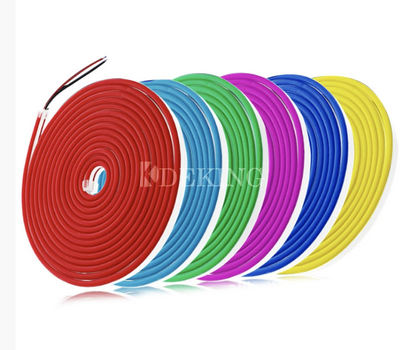
Light Emitting Diodes (LEDs) have revolutionized the lighting industry and beyond, offering energy-efficient, long-lasting, and versatile solutions. The adoption of LEDs spans multiple sectors, demonstrating their significant impact on various industries. From home lighting to advanced medical technology, LEDs provide improved performance, lower energy consumption, and reduced maintenance costs. This article explores how LEDs are used in different industries, from everyday applications to specialized technological fields Wholesale LED Strip Lights.
LEDs in the Lighting Industry
The lighting industry has seen one of the most significant transformations due to LEDs. Traditional incandescent and fluorescent bulbs are gradually being replaced by LEDs, which offer longer lifespans, energy savings, and reduced environmental impact. In residential and commercial settings, LED lights provide efficient and sustainable lighting solutions. Streetlights, office buildings, and homes benefit from LEDs’ low power consumption and extended operational life. Moreover, LED lights can be easily controlled and dimmed, allowing for tailored lighting experiences. These qualities make LEDs a top choice for both indoor and outdoor lighting applications, ensuring optimal illumination while minimizing energy costs.
LEDs in Automotive Industry
The automotive industry has widely embraced LED technology for various lighting and display purposes. LEDs are now commonly found in headlights, taillights, interior lights, and display screens. The automotive sector benefits from LEDs’ energy efficiency, longer lifespan, and compact design, which makes them ideal for modern vehicles. LED headlights provide brighter, sharper light, improving road safety and visibility. In addition, LEDs consume less energy, reducing the load on car batteries and enhancing fuel efficiency. Furthermore, LED lighting in vehicles offers greater design flexibility, enabling manufacturers to create stylish and innovative lighting systems that enhance the vehicle's aesthetic appeal.
LEDs in Consumer Electronics
LED technology has become integral to the consumer electronics industry, particularly in displays. From televisions to smartphones, LEDs offer high-definition clarity, vibrant colors, and lower power consumption compared to traditional display technologies. LED displays, such as those in flat-screen TVs, offer superior brightness, contrast, and color accuracy, providing users with an enhanced viewing experience. Furthermore, LEDs enable slimmer, lighter, and more energy-efficient designs, which are essential features in modern electronics. The rise of OLED (Organic LED) displays has further advanced this technology, offering better flexibility, thinner profiles, and more efficient performance in various devices, including wearable technology and mobile gadgets.
LEDs in Healthcare and Medical Equipment
LED technology has found critical applications in the healthcare sector, especially in medical lighting and diagnostic equipment. LED lights are used in surgical lights, examination lights, and various medical devices due to their precise illumination and minimal heat generation. In medical imaging, LED light sources offer consistent and uniform lighting, crucial for accurate diagnoses. LEDs are also used in phototherapy treatments, such as for neonatal jaundice or skin conditions, due to their ability to emit specific wavelengths of light. Furthermore, LED-based medical devices are becoming more common in dental clinics, where they are used for procedures such as teeth whitening and curing dental materials. The durability, energy efficiency, and precise light output of LEDs make them an essential component in modern medical technologies.
LEDs in Agriculture and Horticulture
LEDs have also made a significant impact on agriculture and horticulture by enhancing plant growth and productivity. LED grow lights are now commonly used in controlled environments such as greenhouses and indoor farming. These lights can be tuned to emit specific wavelengths that are most beneficial for plant growth, improving crop yield and quality. LEDs offer energy efficiency compared to traditional lighting methods like high-pressure sodium (HPS) lamps, making them a cost-effective choice for growers. They also produce less heat, reducing the risk of plant stress and optimizing growing conditions. Additionally, LEDs enable year-round farming, allowing for increased food production in areas with limited natural sunlight. This technology has the potential to transform the future of sustainable agriculture by reducing energy consumption and enhancing productivity.
In conclusion, LEDs are transforming a wide range of industries by providing more efficient, sustainable, and cost-effective solutions. Whether used for lighting, automotive applications, consumer electronics, medical devices, or agriculture, LEDs offer a range of benefits that improve performance and reduce environmental impact. The continued development of LED technology will likely expand its applications even further, shaping the future of industries around the world. As more sectors adopt LED-based solutions, they will continue to drive innovation and sustainability across diverse fields.
